BSD Card & Block Breakout Board
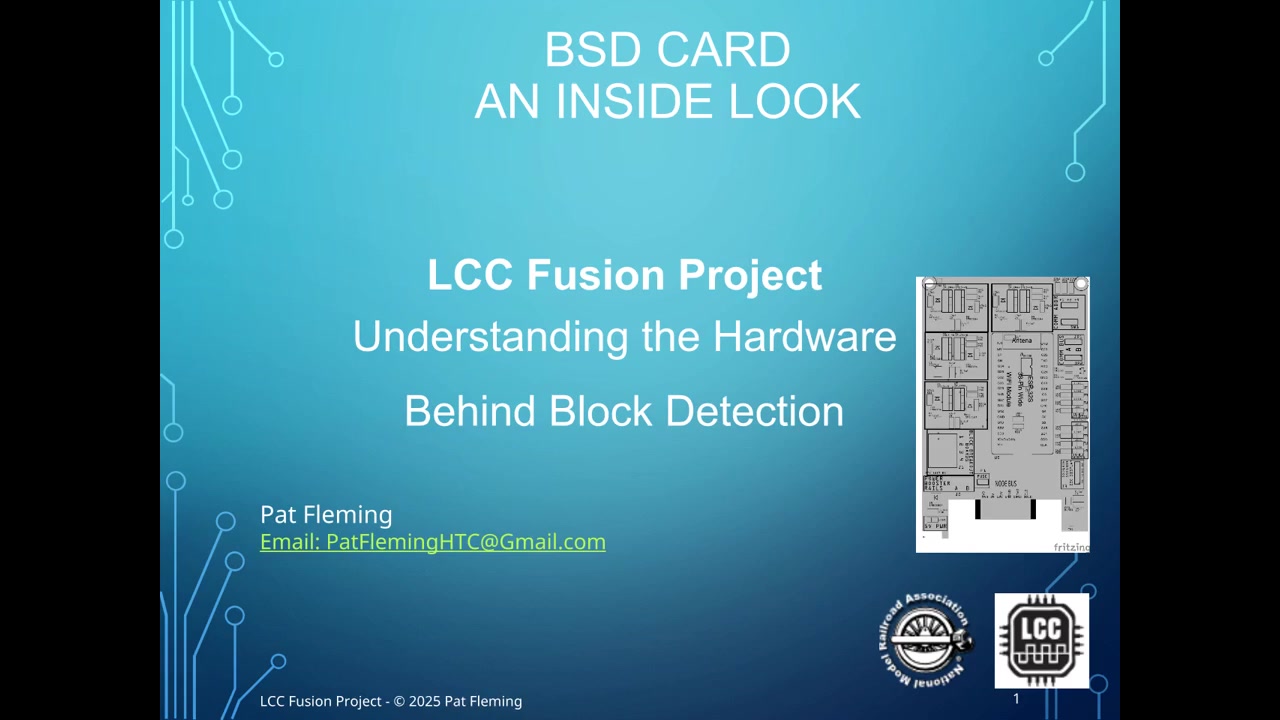
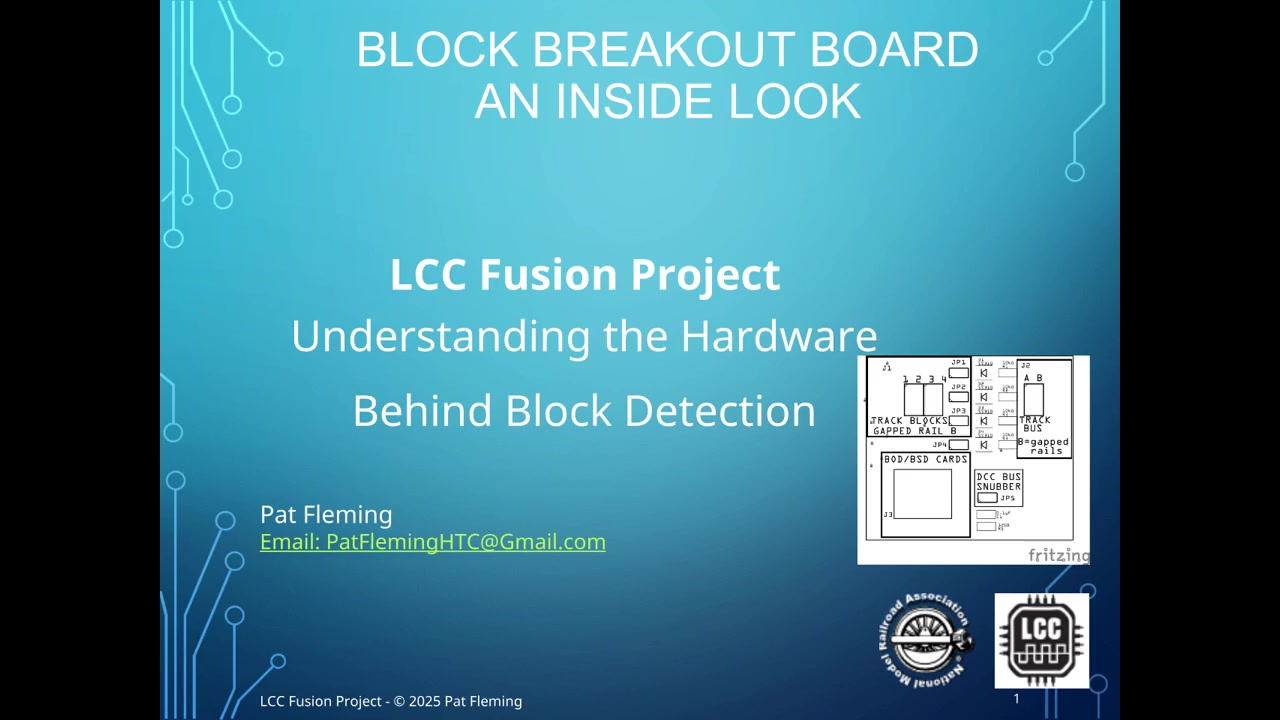
In this LCC Fusion podcast episode, Nelson and Harrison take a deep dive into Block Short Detection using the BSD Card and the standard Block Breakout Board.
These two boards work together to provide per-block short protection, accurate occupancy detection, and automatic recovery that keeps the rest of the layout running smoothly.
The BSD Card is Fusion’s electrical “first responder,” and this episode explains exactly how and why it works.
Watch the Podcasts
What these episodes cover
🔥 What Block Short Detection Really Means
- Why certain blocks—mainlines, yard throats, and crossovers—need local, immediate protection
- How the BSD Card protects four blocks independently
- Why short recovery happens on the card itself, not at the booster
- How BSD Cards prevent wide-area shutdowns and keep trains moving
🔌 How the BSD Card Works
- Reading digital current levels to determine clear, occupied, or shorted
- How the BSD uses its on-board ESP32 to debounce, filter, and interpret block current
- Automatic short recovery:
power off → wait → retry → report - When and why the BSD reports states to the Node Card instead of publishing events directly
- LED indicators for each block to simplify testing and troubleshooting
🧱 The Block Breakout Board
- The wiring layer for four blocks
- Simplifies feeder wiring and reduces clutter under the layout
- Works identically for the BOD, BSD, and BRD Cards
- Uses standard network cables for clean, reliable connections
- Helps isolate wiring issues before connecting to electronics
🤖 Integrating the BSD into a Fusion Layout
- How the BSD Card sends clean state updates to the Node Card via I2C
- How the Node Card publishes LCC events for automation
- Signals, routes, and logic reacting instantly to short or occupancy events
- Short events triggering operator alerts, voice messages, or safety interlocks
⚙️ Configuring the BSD Card
- Setting the occupancy current range for your locomotives
- Using defaults for turnout cards
- Configuring signals:
choose the PWM card, assign lamp lines, set up aspects - Event values auto-populate, reducing setup effort
- Logic statements defined by simple conditions and actions
(e.g., If Block 3 is shorted → Set Signal to Stop)
🔧 Best Practices
- Test using the Node Card’s self-test to confirm I2C connection and EEPROM identity
- Use a small load to verify occupancy thresholds
- Momentary short to confirm short detection and auto-reset
- Use the Node Card’s serial monitor to verify I2C messages
- Keep BSD Cards close to the blocks they protect
- Treat each BSD as a 4-block protected district
Why LCC Fusion’s Protection System Stands Out
Fusion builds on the NMRA LCC model but enhances it with a strong edge-computing architecture:
- BSD Cards interpret and protect blocks locally, without loading the Node Card
- Block state decisions are made before they reach layout logic, improving reliability
- Modular design allows layouts to scale without adding more LCC Nodes
- Breakout Boards keep wiring simple and reduce troubleshooting time
- Self-testing and automatic card identification help installers get it right the first time
The BSD Card and Block Breakout Board together form a robust, scalable, and operator-friendly solution for short detection and block automation.
Downloads and Documentation
-
Full LCC Fusion Documentation: https://patfleming.github.io/LccFusionProject/
-
GitHub Repository: https://github.com/patfleming/LccFusionProject
-
LCC Fusion Podcasts Playlist: https://www.youtube.com/playlist?list=PLg49NFDgDCLRS7j30iTitaWUlfIdiw0Wx
-
Download Block Breakout Board presentation with speaker notes (PPT)